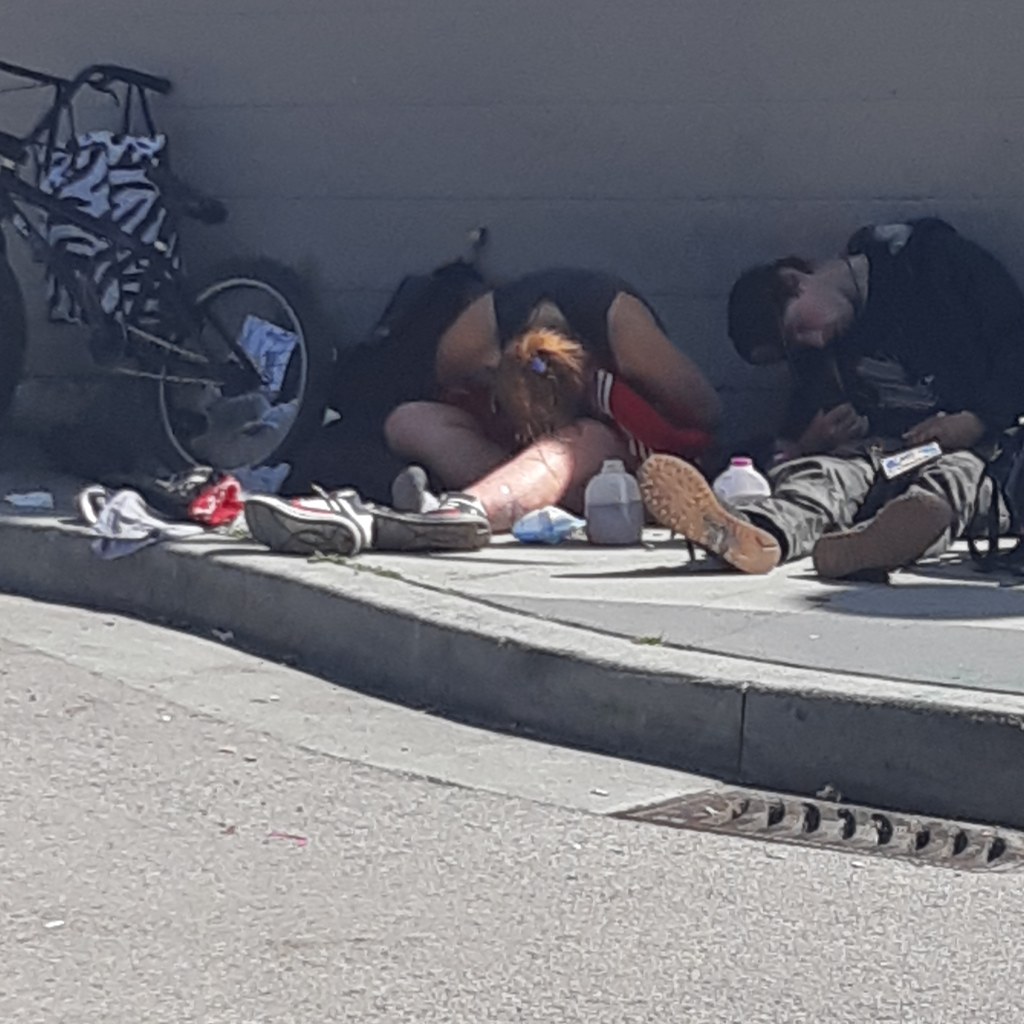
I recently had a conversation with one of my closest friends that found us jumping to the topic of rehabs, recovery houses, and somehow, Matthew Perry.
I have never–not even once–seen a full episode of “Friends,” though I have been the victim of clips here and there. Nothing about that show seemed appealing, witty, intelligent, realistic, relatable, clever, or just plain interesting. I have taught at numerous ESL schools in which VHS cassettes of “Friends” episodes sat on dusty, never-updated resource room shelves (ah, field trips and watching shows: the last refuges of the language-teaching scoundrel) and I still wouldn’t slip a single copy of that sitcom into a VCR for the purposes of English acquisition. In the name of English lessons, I have led groups of students to cathedrals and junkie-strewn neighbourhoods; insisted that they watch “Harold and Maude” and various Disney cartoons; forced them to listen to aughties indie bands and vintage The Who; gone to pubs and probably disgraced myself through antics involving cheap Jager shots and slices of deli meat draped over my face (true story). However, I never, not once, not ever, debased myself or their sensibilities into a solitary viewing of “Friends.”
But I don’t need to have been a fan or even casual viewer of that program to address the topic of Matthew Perry, and his death last year, and his terrible life, and his unshakeable addictions, and his never-ending attempts at rehabilitation, and how even a millionaire many times over simply could not bust out of the psychological and physiological zip ties of drugs and alcohol. How numerous online sites and threads would not stop–did not stop–ridiculing him and judging him for a tremendous medical affliction, one perpetuated by the recovery industry, one that he was obviously aware of and never asked for and simply could not overcome.
His enormous wealth allowed him to slip away in what could arguably be thought of as ideal conditions–in a jacuzzi overlooking the twinkling city–except he was alone, and he was high, and whether it was luxuriating in the materialistic spoils of his affluence or face-and-pants-down next to a mountain of rubbish in the east side, the man died alone, and he died an addict, and he died lonely, and he died after having had to wear a bag to collect his excrement, and he died without his own set of teeth, and he died with absolutely nobody and nothing except the drugs in his system.
If this could happen to a very rich white man in his early fifties with absolutely every and all resources available to him, what does this say about those resources? What does it say about the way that this condition is approached, the ongoing and constant stigma that plagues those who have succumbed to highly-addictive substances that they happen to become mercilessly hooked on? Ask yourself what it says about the society we live in, where alcohol and pills bombard you at every turn, and are legal, are accessible, are dangerous, can be fatal, are wholly unnecessary for recreational use, and then you end up physically dependent on these substances, and the world around you says, You are weak, you are morally inferior, you are lacking in character, you are a reprobate, you should just stop, why don’t you stop, you idiot, you loser, you coward, you escapist, you need to be punished, you need to suffer even further, you chose this, you are choosing this, look at how I don’t do that, look at me, I am what you should be, I will turn my back on you, you are someone else’s problem, you are nobody’s problem because you have nobody, you are a punchline that falls flat.
Then I think, and I thought, about Matthew Perry, someone who seemingly had absolutely everything working for him: he was (at one time) good-looking. He was professionally quite successful. He was very, very wealthy. He was white. He lived in Los Angeles, where all of the preceding characteristics can only guarantee a very easy road. Talent? I’m not sure if he had any apart from making sarcastic quips on a terrible show, lines for which he wasn’t responsible (nor were they improvised), but surely some sort of ability had to be there. He was a young tennis champion before he became an actor. He was Canadian: a nationality and very strong passport to hold around the globe. He had nonstop industry connections, meaning he would never understand the rage and lunacy accompanying the process of manually applying for jobs. He had women, men, everything in-between and self-identifying, more than happy to be with him. He would never have to be alone or without companionship.
He had it all. He had everything a man could ask for. And the devil, the thirst, the hunger, the need, the dopamine pursuit, it sought him out and decided he would become a casualty. As it does to so many of us. It is not a choice. It might start out that way, but then the body and brain become entirely transformed, and it is a colossal amount of work to overcome the altered neuroplasticity, the physical dependence, the behaviours and habits that actually become life-threatening if shrugged off.
He claimed to have spent seven million dollars on rehabs and recovery. Let’s leave that thought there for now. Let’s put aside the obvious–which I will address, because it’s one of the main purposes of this post–which is that, clearly, no adequate treatment was provided in the very expensive facilities he chose to spend his money on. I have been in two rehabs, and still haven’t written about the second one, in which I was not allowed to have counselling, attend the groups, or leave the building, because “Everyone here has to acclimatize to the environment for two weeks first. That’s our policy.” There were also water-balloon fights and movie nights in this treatment centre that had nearly twenty people–many of them cross-addicted–just wanting OUT of their destructive circumstances.
I cannot speak of trauma, because I never endured any. Trauma is at the root of most people who are driven to use. What I can speak of is, when you’re finally lost in physical and psychological obsession, it owns you.
When you’re consumed by despair, depression, and the need to seek out a fast dopamine hit in order to make it through the next moment, your addiction and drug of choice is what dictates every single impulse in your body. Those typical human filters which weed out the bullshit that most of us live with on a day-to-day basis are not just compromised; they are, in fact, nonexistent. There are no filters. There is no ability or capacity to view things objectively, calmly, rationally. There is only the desire to make the feelings end for a while; to stop the panic; to stave off the “black dog” (as Winston Churchill described depression); to fend off the reality of your situation; to continue engaging in a behaviour and a cycle that is so tiring and toxic and draining in its brutality, it is fearful to the onlooker, but even more terrifying to the individual swept up in its totality.
The self-awareness of addiction does not make it any easier. In fact, it multiplies the torture. Knowing exactly what you are doing–being cognizant of your physical and mental decline, your sickness, your increasing loss of sanity, your outbursts, and then being unable to do little more than seek out exactly that which drove you to the point of immobile illness–is the height, or the nadir, of addiction.
The knowledge of how destructive your actions are, defiling and brutalizing every single molecule of your body and brain that scream to be rid of this pollution, is always at the helm of addiction. You hate it, and you can’t seem to stop it, and you are hooked on chemicals that you understand entirely, and you continue to hate it, and you love it, and you refuse to stop loving it, it’s like the most dysfunctional romance imaginable, and you keep returning to it. You keep it up despite likely intellectualizing the madness during your bouts of cleanliness. And to every normal bystander, it makes absolutely no sense when they watch someone–someone who is otherwise so bright and so wonderful–willingly give themselves over to a batch of utter nothingness.
It hurts you more than anyone, but after sliding down into the hole of pure, grimy addiction that takes over every last thing that is sane, meaningful, and real, losing jobs and finances and relationships and homes and family, finally and undeniably sicker than anyone would ever choose to be, you cause tremendous, unspeakable pain to those around you. You are utterly shipwrecked. And yet you still keep going, with only one purpose that overrides everything else you still might have: acquisition and ingestion.
Yet a great deal of the “normal” world around you condemns, pillories, and ridicules what you have become, as though you aren’t racked with mental torture every second of the day, as though guilt and shame aren’t your constant companions. All they see is character weakness, laziness, and moral failure instead of the great medical condition that it truly is. In twelve-step programs, these people are called “normies.” I simply call them “lucky.” But they don’t have a leg to stand on if they have no comprehension, experience, or knowledge.
What do the kids say? If you know, you know. What did Elliott Smith (another addict, and outrageously gifted) sing in yet another song about being in treatment? Fucking oughta stay the hell away from things you know nothing about.
It’s a demon that seizes anyone it feels like; it does not care who and what you are.
* * * * *
Matt (I’m referring to him as Matt from here on in; I feel his pals probably called him that) wrote an autobiography. I actually have not read it; the internet being what it is, I’ve had enough people posting excerpts and passages for me to understand its contents. What I can mainly glean from the fragments I have read is that there was a God-shaped hole in Matt, one that can take form in anybody whether or not they even acknowledge deities and idols of worship. That gap, that longing for meaning, for purpose, for a reason to continue without obliterating yourself one way or another.
Now, I was never raised to be a Jesus robot, and I feel for anybody who was. I believe in God as I understand it, which is a general acceptance of the universe being incredibly vast, intelligent, and unimaginable, of life on Earth as being perfectly synchronized but we animals just haven’t figured out how to work within it, tolerantly and peacefully. I used to ask my ESL students why alien communities didn’t come to visit us; they all unanimously agreed that we are so corrupt, violent, primitive, and unevolved, there would be absolutely no reason to spend the time and energy to come to this planet.
I’m not so sure about that. There are unspeakable, heinous events that occur every moment on a micro and macro scale, but I don’t believe we are beyond repair or salvation. It simply takes the right guidance, the correct measures, the education, the motivation, the community in order to lead us towards a liveable world.
…and all of this is to address what is one of the most predictable, eye-rolling outcome of Vancouver’s drug decriminalization of three years ago.
That’s where I’m going to leave things for now. I may continue with this topic next time, but it’s probably a good idea to focus on something merry and funny and inspiring. Well, life’s not like that every single day, and neither are any of us. Perhaps in the near future: I still haven’t addressed the Recovery Industrial Complex, and how very, very wealthy it is making many people who are reliant on the sickness they pretend to treat.
Thanks for reading. Stay hopeful, faithful, and please trust that things will work out.
Love
Nadz

 verainvancouver@gmail.com
Leave a comment