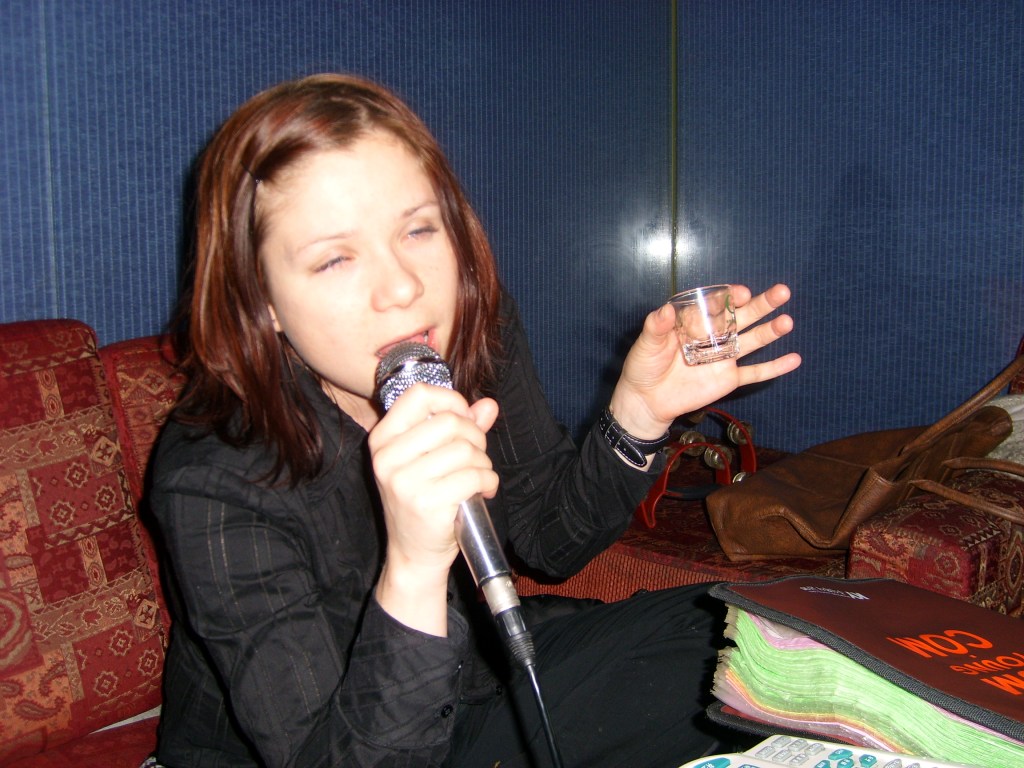
Wine flies when you’re having fun.
In dog wine, I’ve only had two glasses.
Keep calm and pour on.
Booze is the answer, but I can’t remember the question.
Not cute.
You might want to start analyzing yourself and what it is that you’re doing to your body, mind, and life, because it’s not cute. You’re not a wine mom, and it’s not wine o’clock. That ring of red around your lips and those purple teeth are, I promise, not cute. The endless, slurring anecdote about how you burned dinner on Monday? Won’t lie to you: it isn’t cute. Your yelling and sobbing about the dog on “The Petticoat Junction”? Girl Scouts honour: it’s the un-cute.
It’s just not cute, none of it, and there are no cute wall hangings or T-shirts that make it so.
…but if it really is cute, and people tell you your alcohol consumption is cute, and you honest-to-God act really cute when you’re drunk because you know you do, and you can drink as much as you want and it’s not a problem, and you feel everything’s under control despite wondering deep down if you’re ingesting too much and you’re downplaying how much you imbibe–and you get defensive, even irritated or angry, if anyone mentions it to you or expresses concern–then I can promise you one thing, sister: it is not going to stay cute or harmless or under control. It is going to get worse, even if you stay absolutely consistent with the quantity of booze you drink. Which you won’t. You’re going to need more in order to achieve that same effect, and as you age, the cost / benefit ratio is going to be grossly imbalanced, and your age is going to sabotage and betray you as you keep sipping that wine (let’s keep it at wine for now, as it’s been promoted and marketed as sexy, sophisticated, and harmless).
And those sips? They’re going to turn into hearty gulps, and then substantial glugs. Desperate, needy glugs. And it won’t be because the entree you’ve paired it with demands the tannic enhancement: it’ll be because you need to rid yourself of the unbearable feeling of not having booze in your system. That sexy, sophisticated, harmless liquid in your wineglass has nothing to do with enjoying a meal or savouring the complexities of oak-barrelled cabernets containing complex blackberry notes. Besides, we all know that you’re not drinking it because of its price or quality. You’re drinking wine for the same reason anyone drinks alcohol: you want to get nice and tipsy, or perhaps just good and snonkered,
That’s my introduction. Good day!
Now, I do have a sequel to what I began the other week, but I don’t feel like writing it at present. For one, nobody really cares except me, so there’s no urgency or need to carry on with my tale of extraordinary incompetence and evasiveness and inconsistency on the part of Vancouver building management, which is, really, as redundant as you can get. I mean, I’ll finish it at some point because I don’t want it just dangling into outer space like some kind of limp intergalactic penis (which still sounds pretty good to me), but since my life has gotten back on track with a vengeance, my mind is clear and stable, I feel content and entirely balanced, and I’ve learned more about alcohol than I ever thought I’d want to, I thought I might pass along some of my thoughts and beliefs–as well as some headstone-cold facts–about what drinking is doing to you, about how it’s not innocuous in the slightest, and about how scary it is to actually take a step back and admit that you’ve got an issue with alcohol. Worse than admission, in fact, might be the idea that you will have to change, reduce, or even eliminate booze altogether in your life.
If you’re uncomfortable, ticked off, or even petrified and disoriented thinking about living a life without alcohol, then that’s your first very clear indication that you’ve got a drinking problem. Trust me on this. I was there, and I was there for a number of years. It took nearly twenty of them, however, for me to truly grasp exactly what was going on, and finally get some control over what is a very complex, very sad sickness.
* * * * *
It wasn’t so much admitting that I had a problem with alcohol; in fact, that was pretty easy, and seemed self-evident. In 2004, right before I moved to Victoria for three of the happiest (although mostly drinky) years of my life, I felt as though my consumption of ethanol was unreasonable, and it was going to inevitably escalate if I kept it up. I wasn’t sure where to start, especially as I was 28 years old and had only really been drinking for about four years–a very late bloomer, all things considered–and it wasn’t interfering with my life or relationships. At that point, I had it as much under control as someone who drank about five strong vodka drinks per night could have it.
However, I really wanted to get a grip and get some guidance, some help, some insight in terms of understanding what I was doing to myself. Despite the “fun” I was having and the hangovers that were relatively manageable back then, somewhere in the back of my self-preserving lizard brain was the notion that I was doing something really fucking pointless, retarded, and dangerous.
In 2004, the only quitting-drinking book at Chapters that I could find on quitting drinking–in a market that is now very saturated, all puns intended–was something called “The Effective Way To Stop Drinking” by a guy named Beauchamp Colclough, possibly one of the greatest names I’ve ever come across in my life. I still have it, as I keep all of my books, but haven’t picked it up in quite some time. I just recall that some of the things he shared in that book resonated with me, such as the lengths he went to during his regular drinking in order to mask the odour (sucking on peppermints, dousing himself in potent fragrances). Some of the other things were horrifying, and as a fresh university graduate working at her first ESL teaching job, I couldn’t relate to bottoming out, homelessness, and being grateful that anyone would even give me a job scrubbing pots in a restaurant kitchen. It was my inaugural first-person account of what being addicted to alcohol could truly do to a person’s life, and how getting rid of it could turn everything around, and always–always–for the better.
Since then, I have amassed a nice collection of quit lit, ranging from Alcohol Explained by William Porter, to Drinking: A Love Story by Caroline Knapp, to Sober And Staying That Way by Susan Powter. Yes, that Susan Powter. She is an exceptionally brilliant, perceptive, and no-nonsense woman whose book has been tragically overlooked, if not completely lost to time altogether. In the early 90s when she was at the top of her fitness-empire game, giving us great advice for health (“Eat, breathe, move”) and outdated, terrible advice for diet (“Never eat fat”), she was also a crippling alcoholic, drinking through her days and nights for years, teaching aerobics classes and then guzzling beers during her drive home, where she would proceed to get steadily and regularly blasted on scotch, cognac, wine, or all three, and anything else she felt like keeping eighty-proof company with. I then imagine–and this is completely my opinion, unfounded, based solely on her superhuman energy levels and schedule and daily drinking routine–she may have had a pick-me-up in the morning in the form of a few lines of snow. And I’m not talking about Nunavut, either.
I spent the next several years embracing and battling alcohol, alternately convincing myself that I was still young and indestructible and my Russian genes were sturdy enough to fend off the effects of alcohol (which has to be one of the stupidest things I could have ever persuaded myself to believe), and terrifying myself with the mental and physical sickness that was becoming more and more evident to me as the years went past. I would go through bouts of sobriety; I would then feel healed and well and detoxified enough to drink again, totally certain that I could keep it under control this time and not let it spiral away from me. I could stop for weeks, months, and I think the longest I stayed clean was exactly a year and a half, but I always returned to it.
During these years, I was acutely aware enough of the poisonous and detrimental effects of this swill to make one of the biggest blunders of my life, which was to tell my family and friends that I had a drinking problem. Well! Did this ever set me up for judgment, scrutiny, ridicule, belittlement, alienation, and scorn! Not concern or support, but a real arms-length, looking-down-the-nose attitude. While everyone else was free as they pleased to get absolutely shitfaced as often as they wished–and they most certainly did–I was the one with the issue. Nadz was the alcoholic, the drunk, the problematic case, the one to put under a microscope, the one to chastise and push away if there were any indication that she might be battling something that is quite literally a pernicious medical problem. Never mind if friends and family around me couldn’t seem to handle just a few hours of socializing without constant refills from the wine box or the bottle of Crown Royal; God help me if I ever even thought about having a drink in their increasingly-inebriated presence!
A blunder to be sure, as I had no idea it would invite so much hypocrisy and hurt, but in retrospect, it’s actually a great experience and motivator to force yourself to remain sober while being around people who are getting steadily sloshed. I’m sure I don’t need to explain why this is.
I could write for hours and hours about my drinking history, but the purpose of all of this is to helpfully show and suggest that, if you’re a woman and you’re reaching for that bottle as a regular part of your day-to-day existence, rationalizing to yourself all the while as to why you “need” to drink, you might have a problem. If you boast that you can do “Dry January,” why are you glancing at the calendar every day, gritting your teeth yet excited about February 1st, for which you have already begun planning your celebratory plunge back into the booze? If you have to “take a break from drinking”, isn’t this a bit of an indicator that things might be slipping out of your control?
I’m not casting blame, I’m not judging (even though I’ve been judged mercilessly), I’m not preaching or proselytizing or shaking my fist in the air like Lenin, condemning the booze boys and their nefarious ad campaigns and insistence on keeping us in a state of alcoholic slavery. I’m just saying that you very well may be in denial of something that is making your life difficult, and which will only continue to make it worse if you carry on in the fashion that you are. Eventually, you will understand that you and alcohol do not have a mutually-respectful relationship of two equal, benevolent parties: it will take from you far more than you are comfortable giving.
One of the main reasons I knew I had to stop permanently–apart from being in my late 40s and sick of how much of an aberration it was on my otherwise very health-conscious lifestyle–was the fact that alcohol was far, far greedier than I ever was with a bottle of Stolichnaya. I understood that it would not be satisfied until it had taken everything from me, and it would. And then I would have nothing left but alcohol, and it would eventually take my life.
It sounds like laughable madness (there is such a thing) to attribute human characteristics to an insentient substance, but you have to understand that, if you have alcohol dependency, it is no different from any other abusive relationship. “Just leave!” scream those around you, watching you succumb to helplessness, dependency, excuses, terror at the notion of being alone, physical and mental deterioration, and incomparable misery. There is a reason why Caroline Knapp called her memoir Drinking: A Love Story. I highly recommend it, although if I have any criticism of it, it’s that Caroline was riddled with a host of issues and addictions and woes seemingly due to her upbringing; along with being chronically dependent on booze, she had an unspeakably destructive eating disorder, as well as an egregious addiction to cigarettes that would eventually kill her at the unthinkably young age of 42. Her addictions and compulsions, as it is for most, were symptoms of extraordinarily deep-seated issues that she never addressed. Not within the book, anyway.
(An aside: smoking is the one thing I will not just cast judgment on you for doing, but I will ridicule you, put you down, shame you, think less of you, and make faces and cough in an exaggerated way if I am anywhere near your noxious, caustic burning tube of absolute poison and misery. If you are actually paying for and smoking cigarettes in 2024, there is something wrong with you that I don’t think anything can fix. Just try and change my mind; you never, ever will. And yes, I used to smoke.)
There’s a classic questionnaire you can take to determine whether or not you have some dependency on alcohol, and its inclusion in Beauchamp Colclough’s book marked the first time I came across it. Flipping through it now after so many years, I see that I had answered “Yes” to 12 out of the 20 questions, meaning I was on my way to a dastardly hat-trick of true alcohol abuse.
I would like to put forward that there might be a few additional questions to ask yourself if you want to gauge whether or not you have a problem with alcohol. Uncomfortable questions such as:
- Have you ever alleviated the sick, anxiety-riddled feeling of heavy drinking from the night before by consuming alcohol, knowing very well that it would take away the feelings of discomfort?
- Have you ever accused others of having a drinking problem–defensive and full of projection–when they expressed concern about your alcohol consumption?
- Have you ever clock-watched, waiting for the liquor store to open in the morning, or been in a frantic dash to get there for more alcohol before it closes at night?
- Can you comfortably stop at two drinks and be entirely satisfied with that mild buzz?
- Do you hide bottles, whether they be full ones so your family doesn’t see your supply, or empty ones so they don’t know how much you’ve been consuming?
- If you are in a social setting where there is no alcohol involved, are you excited about leaving so you can drink?
- Is drinking alcohol what you “do” with your partner, i.e. drinking is the actual activity?
- Does the idea of eliminating alcohol completely from your life make you anxious, or does it seem like an impossibility?
Okay, it’s getting on in the day. I would say that I’m grateful that it’s a Friday and I’m not using it as a flimsy excuse to get shitfaced, but towards the last while there, I didn’t need any excuse at all: not a day of the week, not a time of the day, not an occasion or a lack of occasion, not a bad mood or a celebratory mood or boredom or excitement or being single or being partnered up or eating pasta or being on a diet or a wedding or a funeral or being homebound or on vacation or fighting with my boyfriend or lusting for him or it being summer or it being winter or it being Christmas or it being Canada Day. No excuse was every excuse, and vice versa.
Just take stock of yourself, girls. I’m going to end here for now. Happy weekend.
Love, Nadz.
verainvancouver@gmail.com
 verainvancouver@gmail.com
Leave a reply to The Ongoing Ennui of Davie Village. – verainvancouver@gmail.com Cancel reply